


Paco Conde, Co-Founder & Jose David Doria, Chief Operations Officer & Gio Dal Mas, Project Manager at Zertifier, Catalonia
Published in the June edition of the Gaia-X Magazine
Energy data spaces become relevant when they help cities solve operational problems. EMPOWER-X, recently recognised as a Gaia-X Lighthouse Ecosystem, applies this approach to the DS4PED pilot in Rubí, where trusted data sharing is used to certify renewable energy use in electric mobility and support the deployment of Positive Energy Districts.
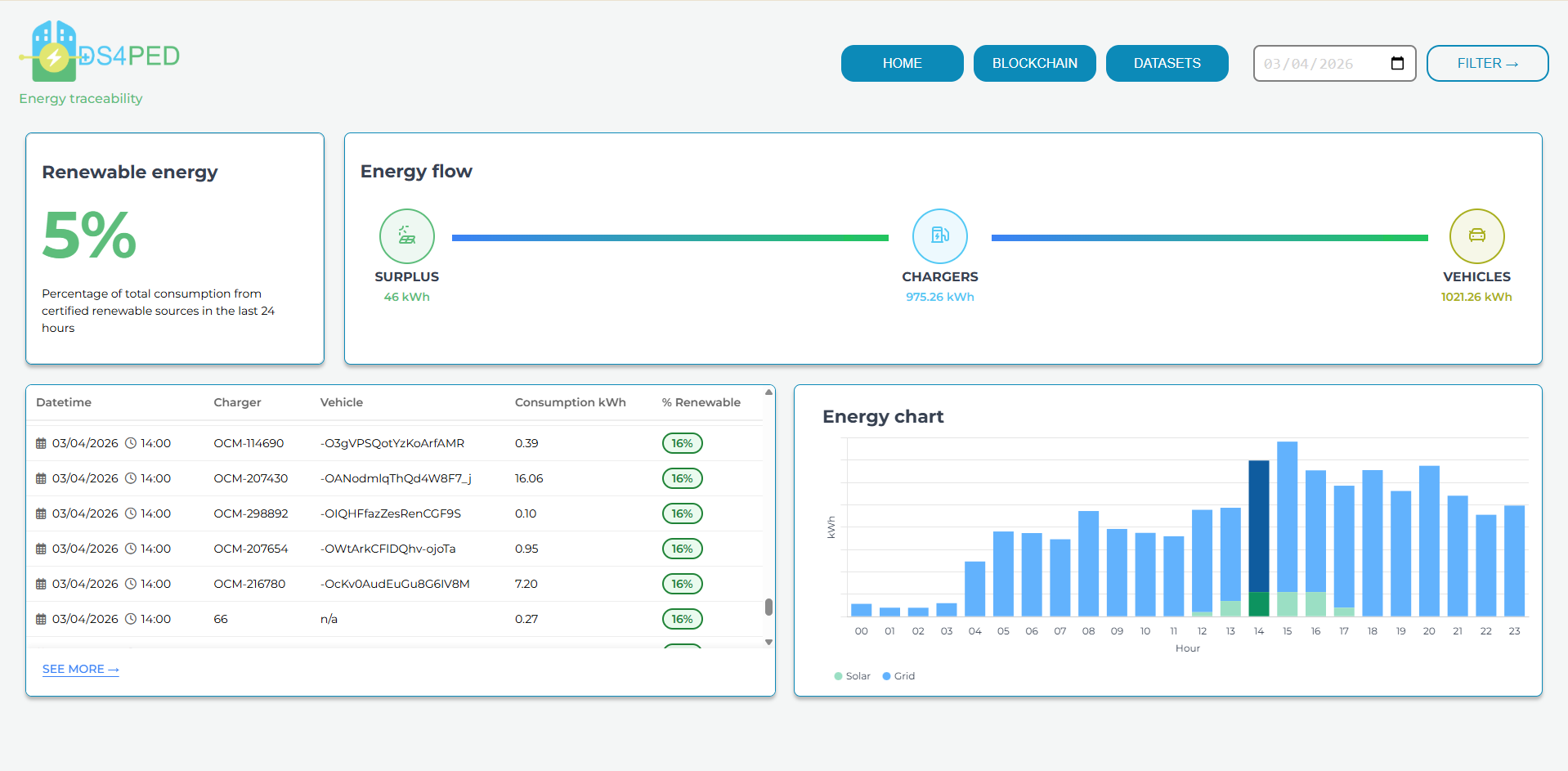
Rubí provides a strong municipal testbed. The city has 31 photovoltaic installations, with 1.5 MWp of installed capacity, and 15 EV charging points. The challenge is not only to produce local solar energy, but to prove when and how this energy is used. Solar generation and charging demand do not always match, especially at night. The Rubí pilot therefore links municipal PV production, EV charging consumption, smartmeter data and mobility services through a traceability layer that can verify the renewable origin of charging events.
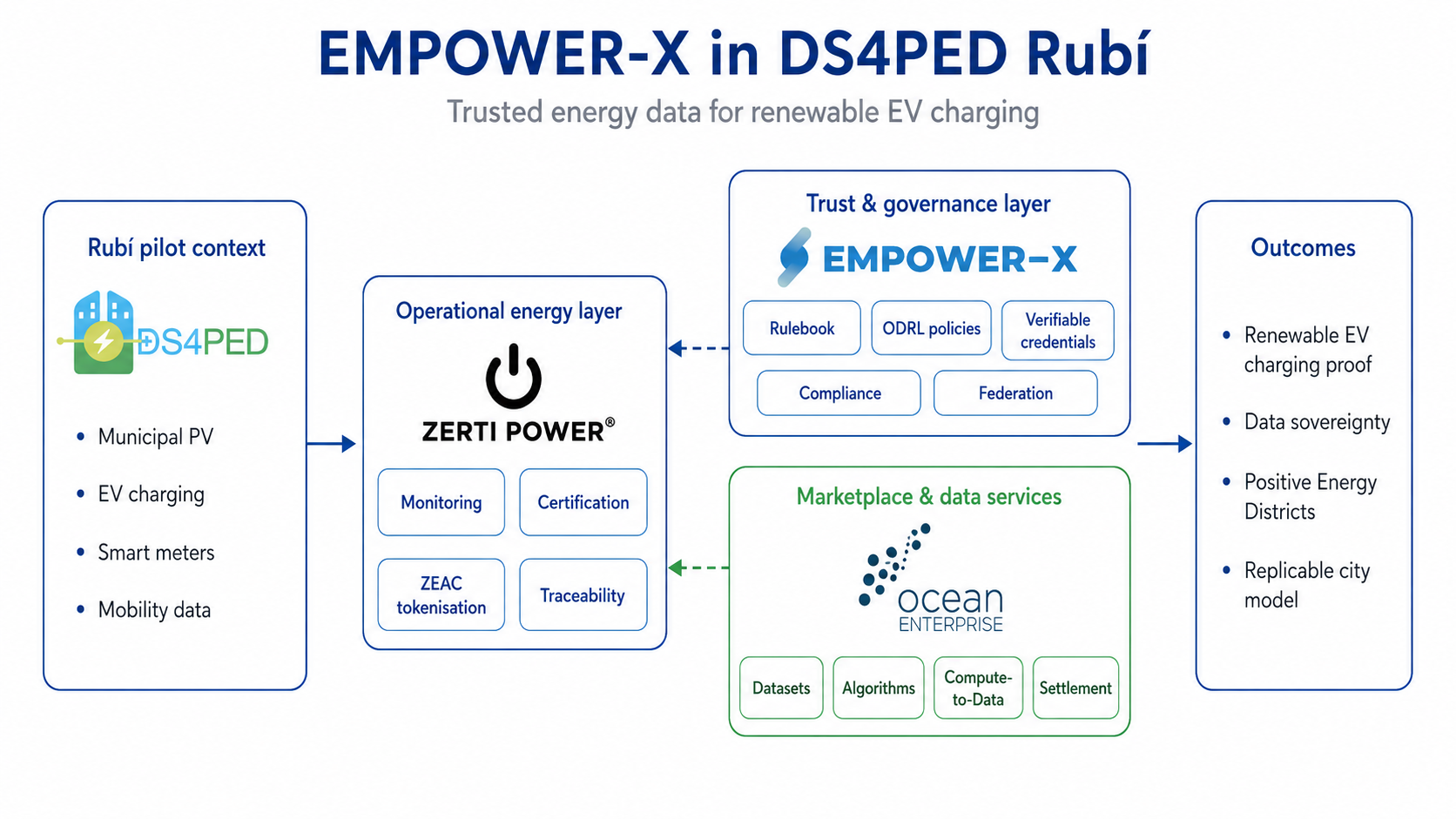
EMPOWER-X combines four functional layers. The Rubí pilot context provides the operational datasets: municipal PV, EV charging, smart meters and mobility data. ZertiPower acts as the operational energy layer, supporting monitoring, certification, ZEAC tokenisation and traceability. The trust and governance layer, aligned with Gaia-X principles, defines the rulebook, access conditions, ODRL-based policies, Verifiable Credentials, compliance and federation. The marketplace and data services layer, supported by Ocean Enterprise Collective, enables publication, discovery and controlled use of datasets, algorithms and Compute-toData services.
A key element is the tokenisation of surplus solar production into ZEAC tokens, linked to digital guarantees of renewable origin. These tokens can be used when direct solar generation is not available, helping the city maintain a verifiable renewable-energy balance for EV charging. Instead of relying on generic green claims, the system connects energy flows, data products and governance rules into auditable digital evidence.
Ocean Enterprise Collective strengthens this model by adding a data-service marketplace layer. Energy and mobility datasets, algorithms and Compute-to-Data services can be published, discovered and accessed under defined policies. This is important for public infrastructure, where EMPOWER-X in DS4PED Rubí: trusted energy data for renewable EV charging IMAGE 1- DS4PED Rubí energy traceability dashboard: certified renewable energy, surplus solar production, EV charging consumption and hourly solar/grid contribution. IMAGE 2 – EMPOWER-X in DS4PED Rubí architecture diagram75 EDITION 8 – 2026 data may be sensitive, commercially valuable or linked to citizens, and where controlled execution of algorithms can be preferable to moving raw datasets.
The lesson from Rubí is that Gaia-X principles are most useful when connected to execution. A rulebook defines who can access a data product, for which purpose, under which conditions and with which audit trail. Machine-readable policies and compliance services can then enforce those rules in daily operation.
For cities, EMPOWER-X offers a replicable path to Positive Energy Districts: renewable energy can be monitored, certified, shared and verified within a sovereign data space. For Gaia-X, the Rubí pilot shows how trust, interoperability and data sovereignty can become concrete municipal infrastructure.
Conflict of interest statement
The authors declare that they have no known competing financial interests or personal relationships that could have appeared to influence the work reported in the submitted work. The current submission presents original work attributed to the authors cited in this article and has not been previously published or sponsored to be published in any other publication other than the Gaia-X Magazine.